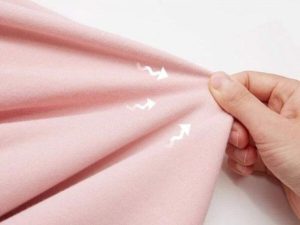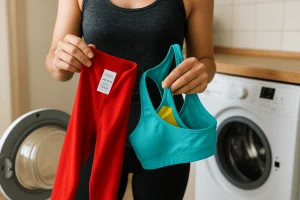
The short answer is yes, you can dye nylon and elastane fabric, but it requires specialized knowledge and controlled industrial processes. This popular blend, found in activewear, swimwear, and hosiery, presents a unique dyeing challenge due to the opposing chemical properties of its two fibers. Understanding the “how” and the “why” is crucial for achieving vibrant, durable, and high-quality results in textile production.
Understanding the Challenge of Dyeing Nylon and Elastane Fabric
The core difficulty in dyeing nylon and elastane fabric stems from the different properties of the two fibers. Each component requires a specific dye class and set of conditions for optimal color absorption, creating a fundamental technical conflict:
- The Requirement for Nylon (Polyamide): This fiber has a strong affinity for color and requires acid dyes to bond effectively. This process must occur in a hot, acidic bath, typically at temperatures between 85°C (185°F) and 100°C (212°F) for efficient color absorption and fixation.
- The Challenge with Spandex (Elastane): Conversely, spandex actively resists the absorption of acid dyes. It is best dyed using disperse dyes. Furthermore, it is highly heat-sensitive. The high-temperature environment essential for dyeing nylon can degrade the polyurethane chains in spandex, permanently weakening its elasticity or even damaging the fiber.
This inherent conflict means that a standard, single-bath dyeing process will yield uneven results—where nylon is deeply colored, the spandex remains pale—and risks compromising the fabric’s core functional property: stretch.
How is Nylon/Elastane Fabric Dyed Industrially?
To overcome these challenges, professional textile mills employ precise, multi-step processes designed to satisfy both fibers’ needs sequentially or under carefully balanced conditions. A detailed industrial approach often involves these critical stages:
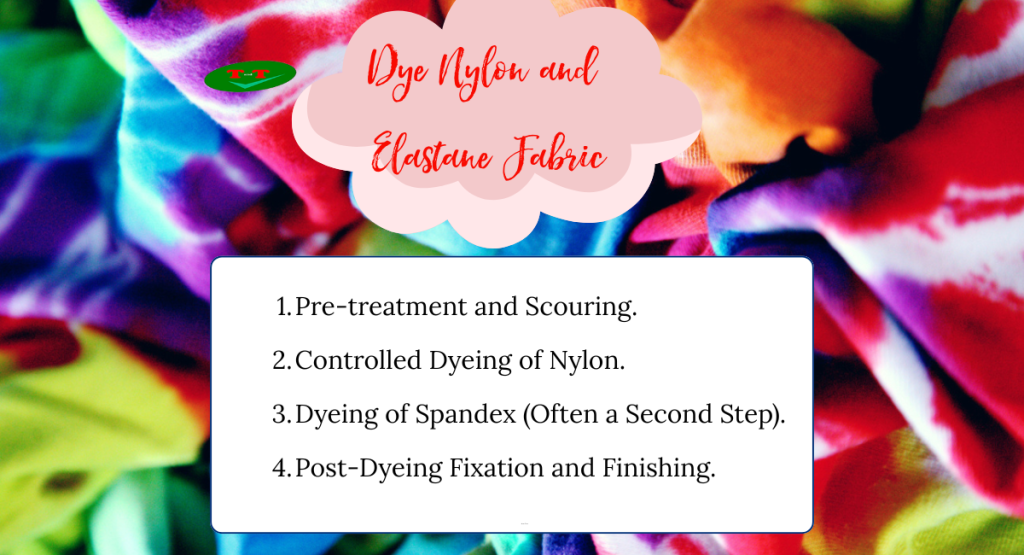
- Pre-treatment and Scouring: Fabric is thoroughly washed to remove oils and finishes, ensuring even dye penetration and preventing patchiness.
- Controlled Dyeing of Nylon: Nylon is dyed first using acid dyes at a controlled temperature (85-95°C) and pH, with leveling agents to ensure even color and protect the spandex.
- Dyeing of Spandex (Often a Second Step): For solid shades, a second step uses disperse dyes at lower temperatures to color the elastane without damaging its elasticity.
- Post-Dyeing Fixation and Finishing: After rinsing, fixation agents lock in the color for durability, followed by softeners to restore the fabric’s handfeel and stretch recovery.
Conclusion
Successfully dyeing nylon and elastane fabric is a complex but routine task in industrial textile production. It is not a simple, single-bath process and is generally not feasible to achieve professional results at home. The key lies in respecting the divergent needs of each fiber through sequential dyeing steps, precise temperature control, and the use of specialized chemicals. For brands and manufacturers, partnering with a dyehouse experienced in synthetic blends is essential to produce vibrant, durable, and high-performance stretch fabrics.
At Tani Thread, we provide not only high-quality yarns but also the technical partnership to ensure your fabrics perform flawlessly. Let our experts guide you in selecting the right yarn specifications and connect you with trusted dyeing partners for perfect color results in every batch.
TANI THREAD CO., LTD
- Address: Thanh Hoa Hamlet, Thanh Dien Commune, Chau Thanh District, Tay Ninh Province, Vietnam
- Hotline: 0984.841.239
- Email: sale@tanithread.com
- Website: tanithread.com
- Fanpage: Tani Thread