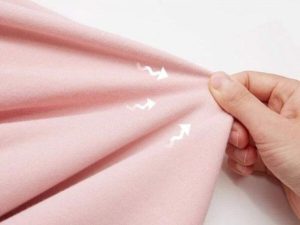
Polyester yarn stands out as a critical type of synthetic fiber yarn, recognized for having the fastest development speed and the highest output globally. As a cornerstone of the modern textile industry, understanding the comprehensive polyester yarn manufacturing process is essential for manufacturers, buyers, and textile enthusiasts alike.
The transformation of polyester chips into high-quality textile yarn is systematically divided into two major stages: melt spinning and post-processing. This guide offers a detailed look at the technology and steps involved in producing versatile polyester yarns, such as POY, DTY, and FDY, which are utilized in everything from high-end apparel and sportswear to home furnishings and medical bandages.
Stage 1: The Melt Spinning Process
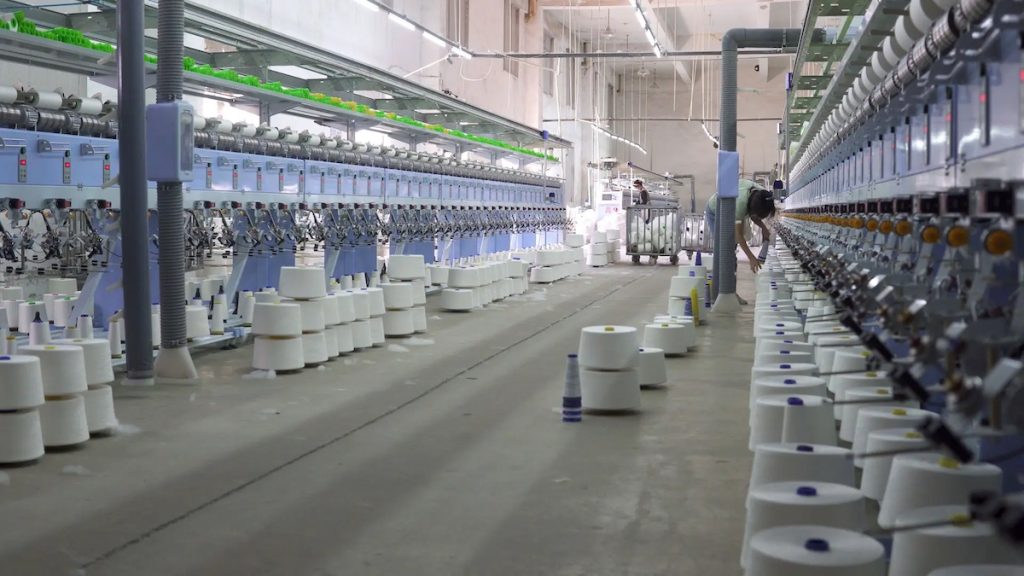
Melt spinning is the fundamental method used to create polyester filament yarn and polyester staple fiber. This initial stage involves transforming solidified polymer into nascent fiber strands suitable for further processing.
Mechanism and Characteristics of Melt Spinning
The process begins when the fiber-forming polymer is melted. This polymer melt is then channeled to flow out of a spinning spinneret through a thin stream. Crucially, the fiber must then be cooled and solidified using ambient air (or occasionally water).
Melt spinning is a preferred method due to several inherent advantages:
- Short Process: The manufacturing route is relatively brief.
- High Speed: Conventional spinning speeds typically range from 900 to 1200 meters/minute, while high-speed spinning can exceed 3600 meters/minute.
- Low Cost: This method offers cost efficiencies in production.
While effective, the number of spinneret holes used in this process varies depending on the desired end product. For polyester filament yarn, the number of holes ranges from 1 to 150. When making polyester staple fibers (PSF), the spinneret commonly has 300 to 800 holes, though this can reach 1000 to 2600 holes or even more. The cross-section of the spun fiber is typically circular if conventional circular spinneret holes are used, but it can be special-shaped if special-shaped spinneret holes are employed.
Classification by Spinning Speed and Product Orientation
The properties and required downstream processing of the polyester yarn are directly determined by the spinning speed used during the melt spinning process. This relationship defines four main process routes, each yielding a product with a unique level of molecular orientation and crystallization:
| Spinning Process | Product Name | Abbreviation | Performance Characteristics |
| Conventional Spinning Process | Polyester undrawn yarn | UDY | Fiber molecules are basically not oriented and not crystallized; resulting in low strength, long elongation, and poor dimensional stability; generally unsuitable for direct textile use. |
| Medium-Speed Spinning Process | Polyester medium-oriented yarn | MOY | Fiber molecules have a small amount of orientation, higher than UDY but lower than pre-oriented filaments; structural state is not stable enough for direct textile use. |
| High-Speed Spinning Process | Polyester pre-oriented yarn | POY | Moderately stretched, possessing a certain degree of orientation and a small amount of fine grains; still has low strength and large elongation, making it generally unsuitable for direct processing into fabrics. |
| Ultra-High-Speed Spinning Process | Polyester high-oriented yarn or Polyester fully drawn yarn | HOY or FDY | HOY: High degree of molecular orientation, good dyeing performance, but large elongation and thermal shrinkage, failing to meet general wearing requirements. FDY: Made by one-step spinning and drawing; stable quality, few filaments/broken ends, and good dyeing uniformity, making it ideal for high-speed weaving. |
Detailed High-Speed Spinning Example (POY Production)
The high-speed spinning process, which typically operates between 3000 to 3600 meters/minute and yields pre-oriented yarn (POY), is the most common route used for producing textured yarns.
The steps involved in this process are:
1. Material Feeding and Melting: Polyester chips are introduced into the chips hopper. They are then melted, and the resulting polymer melt is fed into a screw extruder, ensuring a stable flow.
2. Filtration and Extrusion: Inside the screw extruder, the melt is filtered. It is then pressed into the spinneret to be sprayed out as a thin stream of melt.
3. Condensation: The thin streams are quickly condensed by cold air, forming a solidified tow fiber.
4. Pre-Stretching and Winding: During the fiber’s descent, the function of the yarn guide generates pre-stretching. This action also serves to make the fiber thinner. Finally, the nascent fiber is wound into a specific shape roll using the winding system.
Stage 2: Post-Processing – From Nascent Fiber to Finished Yarn
Post-processing is a crucial series of steps that modifies the structure and properties of the spun nascent polyester fiber to make it suitable for textile production. These processes enhance essential qualities like elasticity, strength, and dye affinity. Post-processing is generally divided into five key steps: POY to DTY conversion, twisting, hanking, dyeing, and winding.
POY to DTY Conversion (Drawn Textured Yarn)
The conversion of POY (Pre-Oriented Yarn) into DTY (Drawn Textured Yarn) is achieved by combining the drawing and twisting processes on the same machine. DTY, generally using POY as its raw material, is classified as a low-elasticity yarn obtained through a single step of stretching and deformation. While DTY possesses a certain elasticity and stable quality, meeting the required strength and elongation for use, its hand feel is typically not as soft as conventional textured yarn.
The detailed processing technology for polyester DTY includes the following sequential steps:
1. Raw Material Feeding: Polyester POY raw material is fed into the machine.
2. Stretching: The POY is stretched to obtain product (a), typically using a stretching ratio of 1 to 1.1 times.
3. Heat Deformation: Product (a) undergoes heat deformation to yield product (b); the required temperature for this heating deformation is specifically maintained between 160 and 180 °C.
4. Cooling: Product (b) is cooled to obtain product (c).
5. False Twisting: Product (c) is subjected to false twisting treatment to obtain product (d).
6. Networking: Products (f) and (d) are processed via a network nozzle to create product (e). The network pressure of this nozzle is maintained at 1.4 to 1.6 kg.
7. Heat Shaping: Product (e) is subsequently heated and shaped to obtain product (f).
8. Oiling and Winding: The finished polyester DTY is obtained by performing oiling and winding treatment on product (f).
Although the resulting polyester DTY generally meets the requirements for textile yarns, subsequent processes are necessary to achieve better properties, such as enhanced elasticity and wear resistance, and to incorporate specific colors through dyeing.
Twisting Process
The twisting process involves combining two or more single yarns and twisting them together using a machine. This mechanical action is necessary to produce strong, elastic strands. The resulting twisted yarn exhibits properties critical for subsequent processes and final textile quality, including uniform thickness, a smooth surface, and enhanced wear resistance. While some twist is imparted during the POY to DTY stage, additional twisting is required for textiles that demand high-twist yarns as their raw material.
Hanking Process
Hanking is the step dedicated to preparing the yarn for successful dyeing. The primary purpose of hanking is to loosen the twisted polyester yarn. This loosening ensures that the dye liquor can penetrate completely into the core of the yarn during the dyeing process. During hanking, workers often add water to tighten the yarn slightly. Once this process is complete, the product takes on the form of “bread yarn”. This “bread yarn” is then packaged and transported to the dyeing facility.
Dyeing Process
Dyeing is a process that highly tests experience and technology, requiring not only precise dye ratios but also careful temperature control. In contemporary production, high-elastic polyester yarn typically utilizes the hank dyeing process of “bread yarn”.
The dyeing sequence involves:
1. Preparation: The fiber yarn is stacked in the dyeing machine in a hank shape.
2. Dye Circulation: A pump or mechanical device is used to circulate or agitate the dye liquor, ensuring the polyester yarn is dyed uniformly.
3. Color Matching (Quality Control): Before mass dyeing, professional color staff meticulously prepare the color formula based on the customer’s sample. The prepared sample is dyed and then compared to the customer’s sample under a specified lighting environment. Mass dyeing only commences after confirmation that there is no color difference.
4. Functional Additives: Experienced workers add specialized additives at appropriate times to impart corresponding functions to the yarn, such as waterproof, heat preservation, or antibacterial properties.
Winding Process
Winding represents the final step in yarn post-processing. The objective is to convert the hanked and dyed polyester yarn (bread yarn) into tube yarn. This final tube yarn product is the material customers can use directly to produce textile products, such as socks and medical bandages.
Preparation for winding is crucial and involves:
1. Drying: The dyed bread polyester yarn is placed in a cool area and dried using wind, a process that typically lasts 2 to 3 days.
2. Preparation for Spooling: Workers then place the dried bread yarn on a shelf, spread it out evenly, and cut off any surface yarn that has been exposed to the air for an extended period.
3. Final Spooling and Inspection: The prepared yarn is placed on the winding machine to be spooled onto the tube. After winding, the tube polyester yarn undergoes final inspection by workers before it is packed, stored, and shipped to customers.
Conclusion
The polyester yarn manufacturing process is a highly engineered and systematic journey that transforms simple polyester chips into high-performance textile yarns. From the precision of melt spinning—where molecular orientation and spinning speed define products like POY, FDY, and HOY—to the sophisticated post-processing stages such as drawing, texturing, twisting, dyeing, and winding, each step plays a decisive role in determining yarn quality, functionality, and end-use performance.
Thanks to this flexible manufacturing structure, polyester yarn has become one of the most widely used fibers across industries. It is not only essential for apparel and sportswear, but also for home textiles, industrial fabrics, medical bandages, and functional textiles requiring durability, elasticity, and color stability. Understanding this complete process enables manufacturers and buyers to select the right yarn type for specific applications, while also laying the foundation for exploring advanced topics such as yarn texturing, functional finishes, and sustainable polyester production.
Behind every high-quality covered yarn is a carefully controlled polyester yarn manufacturing process—starting with POY. At Tani Thread, we specialize in producing covered yarn for the U.S. market, using selected POY and polyester yarn inputs to ensure stable elasticity, uniform covering, and consistent performance across batches.
If you are looking for a reliable covered yarn supplier from Vietnam for apparel, hosiery, or technical textile applications, Tani Thread is ready to support your sourcing needs.
TANI THREAD CO., LTD
- Address: Thanh Hoa Hamlet, Thanh Dien Commune, Chau Thanh District, Tay Ninh Province, Vietnam
- Hotline: 0984.841.239
- Email: sale@tanithread.com
- Website: tanithread.com
- Fanpage: Tani Thread