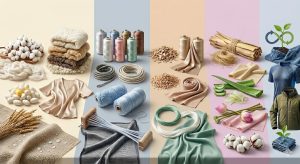
Few terms in the world of materials are as broad and often misunderstood as “textile”. Is a simple spool of thread a textile? What about a roll of non-woven fabric used under roads? And how is “textile“ different from “fabric”?
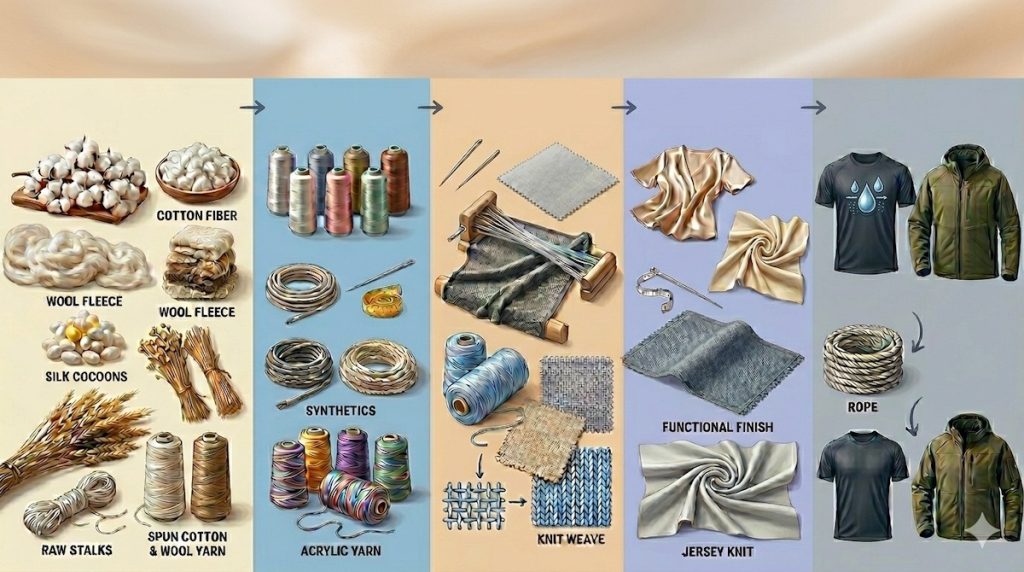
This article provides a clear, practical, and technically accurate answer to these questions. You will learn the definition, origin, key characteristics, classification methods, and real-world applications of textiles in modern industry—from apparel to advanced technical materials.
Understanding Textile: Definition, Origin, and Key Characteristics
What Is Textile?
This category encompasses a vast array of products, including fabrics, threads, cords, ropes, and even non-woven materials. A textile can be a finished product or an unfinished material, and it may or may not have a specific intended use at the time of its creation.
The word “textile“ is derived from the Latin verb texere, which means “to weave” and the noun texus, meaning “woven fabric” or “cloth.” At its core, the origin of the word refers to the physical act of intertwining materials to create a structure.
While many people traditionally associate textiles primarily with the clothing industry, the modern definition is significantly more expansive. Today, a textile refers to any material made by weaving, knitting, or intertwining fibers or yarns. This means the term covers a vast spectrum of items, including:
- Raw materials: Threads, yarns, and cords.
- Finished and unfinished goods: A bolt of cotton waiting to be cut is a textile, as is a finished industrial rope or a fishing net.
- Diverse structures: It even includes non-woven materials where fibers are bonded together without traditional weaving.
The Origin and Evolution of Textiles
The history and development of the textile industry is a long journey closely linked to the evolution of human civilization, from the use of primitive materials to modern smart technologies.
Here is a more concise summary of the three periods :
- Prehistoric Beginnings: Starting around 40,000 BC with animal hides for survival, textiles advanced significantly with the 25,000 BC invention of bone needles for stitching. By 4,000 BC, early civilizations transitioned to spinning and weaving fibers like linen and silk using manual tools.
- Development of Materials and Industry: The Industrial Revolution transformed the field through mass production, making textiles faster to manufacture and more affordable. The 20th century introduced synthetic fibers like nylon and polyester, which became the foundation for both everyday apparel and diverse industrial applications.
- The Era of Technical Textiles: Modern textiles now prioritize technical performance over aesthetics, serving critical roles in medicine, aerospace, and safety. Current innovations focus on “smart” fabrics, nanotechnology for durability, and sustainable bio-based materials to reduce environmental impact.
Key Characteristics of Textiles
Textiles are materials constructed from fibers or yarns through weaving, knitting, or bonding. Key properties include strength, moisture absorbency, thermal insulation, and elasticity.
- Flexibility and softness: Textile fibers are flexible and soft to the touch, allowing them to be manufactured into pliable fabrics.
- Breathability and hygroscopy: This refers to how a material interacts with moisture. For example, cotton is highly absorbent and breathable, while wool is unique because it can absorb up to 30% of its weight in water without feeling wet.
- Thermal regulation: Some textiles, like wool and silk, are natural insulators or thermoregulators, keeping the wearer warm in winter and cool in summer.
- Elasticity and resilience: This is the ability of a fabric to stretch and return to its original shape. Synthetic fibers like spandex are specifically engineered for extreme elasticity, stretching up to 800% of their length.
- Durability and abrasion resistance: Synthetic fibers like nylon are valued for being exceptionally tough and resistant to wear and tear.
Textile vs Fabric: What’s the Difference?
While the terms “textile” and “fabric” are frequently used as synonyms in everyday conversation, they hold distinct meanings within the manufacturing and design industries. The easiest way to remember the difference is through a simple rule: All fabrics are textiles, but not all textiles are fabrics.
The Broad World of Textiles
At its most fundamental level, textile is a broad umbrella term. It refers to any material created by fabric construction methods. Because it is a general category, textiles encompass a vast range of products, including threads, cords, ropes, and nets.
Crucially, a textile can be either a finished or an unfinished item, and it may not even have a specific intended use at the time of its creation. For example, a raw spool of yarn or a general bolt of cotton is considered a textile. Furthermore, the application of textiles extends far beyond clothing; they are vital components in industrial geotextiles, medical gowns, and even automotive safety systems like airbags.
The Specificity of Fabric
The term fabric has a more narrow and specific definition. Originating from the Latin word fabrica—which translates to a “workshop,” “skillful trade,” or “art” —fabrics are finished materials designed for a defined purpose, such as making a dress, a shirt, or upholstery. While they are also made through weaving, sewing, or stitching, fabrics are typically the result of additional processing.
In the global market, “fabric” is the standard term for materials used in garment construction. Unlike textiles, fabrics are almost always the supple materials we associate with clothing and home linens. Therefore, a fabric is essentially a textile that has been prepared and “finished” for a specific human use.
Distinguishing between the two helps clarify the manufacturing process.
Types of Textile: Classification Methods Explained
Textiles can be classified in multiple ways depending on your perspective. Each classification method serves a different purpose. Below are four essential ways to categorize textiles: by fiber type, by manufacturing method, by end-use application, and by processing/finishing level.
Classification by Fiber Type
Textile fibers are primarily classified into three types based on their source: natural fibers, synthetic fibers and regenerated/manufactured fibers . Understanding these materials in textiles helps buyers select the right fiber for each application.
Natural Fibers
Derived from nature, these are categorized by their origin.
- Plant-based (Cellulosic): Cotton, flax (linen), hemp, and jute. Known for being breathable and absorbent.
- Animal-based (Protein): Wool (sheep), silk, cashmere, and alpaca. Known for warmth and elasticity.
Synthetic Fibers
Man-made fibers created through chemical synthesis from petrochemicals.
- Examples: Polyester, nylon, acrylic, and spandex.
- Properties: Highly durable, hydrophobic (moisture-resistant), and quick-drying.
Regenerated/Manufactured Fibers
These are made from natural cellulose (like wood pulp) that is dissolved and regenerated into fibers, often termed “regenerated cellulose.”
- Examples: Viscose (rayon), lyocell, and modal.
- Properties: They combine natural skin-friendly qualities with the durability of man-made materials.
Classification by Manufacturing Method
Textiles are classified by manufacturing method primarily into woven, knitted, and non-woven fabrics. These methods define the structural integrity, stretch, and durability of the material.
- Woven fabrics: Produced by interlacing two sets of yarns (warp and weft) at right angles using a loom. Examples include plain weave, twill, and satin.
- Knitted fabrics: Created by interlocking a series of loops from one or more yarns using needles. This method creates fabrics with high elasticity, such as jersey (single knit) or rib knits (double knit).
- Non-woven fabrics: Formed by bonding, felting, or interlocking fibers directly into a sheet, rather than weaving or knitting. Methods include thermal bonding, chemical binding, and mechanical entanglement (e.g., felt).
Classification by End-Use Applications
Textiles are classified by end-use into three primary categories—apparel, household and technical textiles. Technical textiles, a major category, are further segmented into 12 distinct sectors focusing on functionality, performance, and durability over aesthetics. This section will be presented in more detail in the Applications of Textile section below.
Classification by Processing and Finishing Level
Textiles are classified by processing and finishing level to define their stage of refinement, ranging from raw “greige” goods to highly functional finished products. The process converts raw fibers into consumer-ready materials by improving appearance, feel, and performance.
This classification refers to the sequential steps in manufacturing, moving from unfinished to finished.
- Greige Goods (Unfinished): Fabrics just off the loom or knitting machine. They are typically dull, dirty, and contain weaving oils or starch (sizing).
- Preparatory/Pre-treatment (Routine Finishing): Initial wet processing to remove impurities. Examples include:
- Desizing: Removing starch added for weaving.
- Scouring: Washing with soap to remove oils and wax.
- Bleaching: Whitening the fabric.
- Singeing: Burning off protruding fibers for smoothness.
- Convertible/Dyeing & Printing: Processes that add color and patterns, including mercerizing to improve sheen and dye uptake.
- Final Finishing: The last steps to impart aesthetics or functionality before reaching the consumer.
Applications of Textile in Modern Industry
Apparel Textiles
Apparel textiles primarily focus on creating materials for clothing production. In the industry, the term “fabric“ is specifically used to describe finished textiles designed for a defined purpose, such as making a dress, shirt, or trousers.
These materials are created through weaving, knitting, or intertwining fibers, and they often undergo additional processes like stitching to transform base textiles into functional garments. Common materials include natural fibers like cotton, linen, and silk, as well as synthetic fibers such as nylon and polyester.
Household Textiles
Household textiles include finished or unfinished materials used for home furnishing and decoration. Standard applications range from curtains and carpets to bed sheets and bags.
A significant portion of fiber weight in this category—over 35% —is dedicated to home furnishings, particularly involving the use of loose fibers for wadding applications. Beyond aesthetics, these textiles also provide functional benefits, such as utilizing hollow fibers in bedding and sleeping bags for their superior insulating characteristics.
Technical Textiles
Technical textiles represent a modern technological shift where fibers, yarns, and fabrics are used for functional performance rather than traditional clothing or furnishing. They are divided into twelve specific end-use applications:
- Agrotech (Agriculture): These are used extensively in food production, including fishing nets, ropes, and lines, as well as various covering and protection applications for horticulture.
- Buildtech (Construction): Textiles like glass and polyester fabrics are utilized for roofing, while others serve as breathable membranes to prevent moisture penetration in walls and provide building insulation.
- Clothtech (Clothing components): This category includes technical components used during apparel manufacturing, such as sewing threads, interlinings, wadding, and insulation, but does not include the main outer fabric of the garment.
- Geotech (Geotextiles): These specialized textiles are used in civil engineering to separate, drain, and filter, allowing for more stable road embankments and railway cuttings.
- Hometech (Home furnishing): This segment focuses on technical materials like hollow fibers for insulation in bedding or fibers used to replace flammable foams in furniture to reduce health and fire hazards.
- Indutech (Industrial): This includes vital industrial components such as filters, conveyor belts, abrasive belts, seals, gaskets, and reinforcements for printed circuit boards.
- Medtech (Medical & Hygiene): Dominated by nonwovens, this sector includes baby diapers, wipes, adult sanitary products, surgical gowns, and face masks.
- Mobiltech (Transportation): Representing the largest single market (20%) , these are used in cars, trains, and aerospace for carpeting, seating, tire reinforcement, safety belts, and airbags.
- Oekotech (Environmental): These textiles are specifically used for the protection of the environment and ecology, though they often overlap with segments like Geotech and Agrotech.
- Packtech (Packaging): Traditionally made from jute or cotton, these increasingly use polypropylene for sacks, bags, tea bags, and various wrapping for food protection.
- Protech (Personal Protection): These are engineered to protect against extreme hazards, including ballistic impact, fire, extreme heat or cold, chemical hazards, and high voltages.
- Sporttech (Sports & Leisure): This market focuses on high-performance clothing and footwear, as well as equipment like parachutes, hot air balloons, and sailcloth.
Understanding what textile truly means is the first step to working effectively with materials—whether you are selecting a sewing thread, comparing woven vs knitted fabrics, or exploring technical textiles for specialized applications. The industry rewards clarity in terminology.
Remember the core distinction: All fabrics are textiles, but not all textiles are fabrics. Knowing how to classify by fiber type, manufacturing method, end-use, and finishing level helps you communicate more precisely and avoid costly material mismatches.
Among the most versatile textile materials today are elastic yarns used in stretch fabrics, sportswear, denim, and medical textiles. In particular, covered elastic yarn plays a critical role in giving fabrics flexibility and recovery.
Tani Thread supplies high-quality covered elastic yarn and other covering yarn solutions for garment factories and textile mills. If you are sourcing those yarns and need a dependable manufacturing partner, contact Tani Thread to discuss your order requirements.
TANI THREAD CO., LTD
- Address: Thanh Hoa Hamlet, Thanh Dien Commune, Chau Thanh District, Tay Ninh Province, Vietnam
- Hotline: 0984.841.239
- Email: sale@tanithread.com
- Website: tanithread.com
- Fanpage: Tani Thread