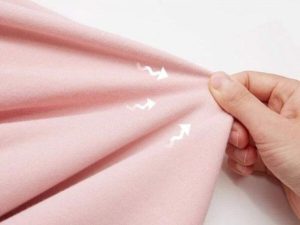
Elastane—also known as spandex or Lycra®—is a critical performance fiber in modern textiles, valued for its exceptional stretch and recovery. For manufacturers and buyers alike, understanding how elastane is produced and how its quality is verified is essential to ensure consistent performance, compliance, and long-term product reliability.
How Elastane Is Made: From Polymer to Elastic Filament
Elastane is a synthetic elastomeric fiber primarily composed of segmented polyurethane. While several production routes exist, solution dry spinning is the dominant industrial method due to its efficiency and fiber uniformity.

Key Production Steps
- Polymer Formation
Elastane polymer is created by reacting a long-chain polyol (soft segment) with a diisocyanate (hard segment), forming a segmented polyurethane structure responsible for elasticity and recovery. - Dissolution and Spinning
The polymer is dissolved in a solvent to form a viscous solution, which is extruded through spinnerets into a heated chamber. The solvent evaporates, leaving solid elastane filaments. - Drawing and Stabilization
Filaments are stretched to align molecular chains, improving tensile strength and elastic recovery, then heat-set to stabilize performance. - Finishing and Winding
The fiber is treated with a protective finish and wound onto packages, ready for covering, core-spinning, or blending.
This process allows elastane to achieve elongation up to 5–8 times its original length with excellent snap-back properties.
Quality Standards & Testing Methods for Elastane
To ensure elastane meets performance and safety expectations, manufacturers rely on internationally recognized testing standards. These standards are widely applied in yarn production, fabric manufacturing, and garment sourcing.
Key Quality Parameters and Test Methods
| Quality Parameter | What It Measures | Test Standard | Evaluation Method | Purpose |
| Linear Density (Denier / dtex) | Yarn fineness consistency | ISO 2060 | Measure mass per unit length; compare deviation across samples | Ensures yarn uniformity |
| Tensile Strength & Elongation | Breaking force and stretch ratio | ASTM D2256 | Tensile tester measures max force and % elongation at break | Confirms elasticity & durability |
| Elastic Recovery | Ability to return to original length | ASTM D3107 | Stretch–release cycles; measure permanent deformation (%) | Evaluates long-term performance |
| Heat Resistance | Dimensional stability under heat | ISO 5079 | Heat exposure followed by length change measurement | Prevents deformation during finishing |
| Chemical / Chlorine Resistance | Resistance to chemicals (e.g. swimwear use) | AATCC 162 / 183 | Repeated exposure to chlorine; strength and elasticity retention check | Ensures end-use suitability |
| Dimensional Stability | Shrinkage after laundering | AATCC 135 / ISO 6330 | Wash–dry cycles; compare before/after dimensions | Maintains garment shape |
| Harmful Substances | Chemical safety for skin contact | OEKO-TEX® Standard 100 | Lab chemical analysis against restricted substance list | Regulatory & consumer compliance |
These methods are established and maintained by organizations such as ASTM International, International Organization for Standardization, and AATCC, ensuring global consistency in elastane evaluation.
Why These Standards Matter
Consistent testing allows manufacturers to:
- Maintain batch-to-batch consistency
- Meet export and brand compliance requirements
- Reduce downstream issues during knitting, dyeing, and finishing
- Support performance claims for activewear, denim, swimwear, and medical textiles
Conclusion
Elastane’s unique performance is the result of precise chemical engineering and controlled manufacturing, backed by rigorous international testing standards. For textile manufacturers and buyers, understanding both the production process and the quality control framework is key to selecting elastane that delivers reliable stretch, recovery, and durability in real-world applications.
By sourcing elastane verified against recognized ASTM, ISO, and AATCC standards, manufacturers can ensure technical confidence and long-term product value.
TANI THREAD CO., LTD
- Address: Thanh Hoa Hamlet, Thanh Dien Commune, Chau Thanh District, Tay Ninh Province, Vietnam
- Hotline: 0984.841.239
- Email: sale@tanithread.com
- Website: tanithread.com
- Fanpage: Tani Thread