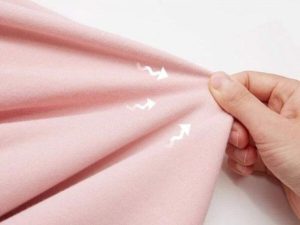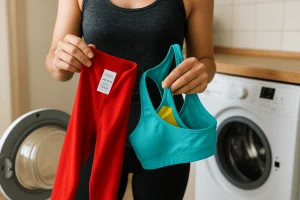
The debate around elastane—also known as spandex or Lycra®—often falls into an oversimplified trap: labeling it as wholly “sustainable” or “harmful.” For professionals in textile sourcing, development, and production, the real question is more nuanced: Does the functional value of elastane outweigh its trade-offs for my specific application? This analysis moves beyond polarizing takes to provide a clear, balanced perspective on elastane’s role in modern fabric engineering.
Advantages of Elastane
Have you ever wondered what gives your favorite sportswear, body-hugging jeans, or swimwear their incredible stretch and flexibility? The answer lies in Elastane (also known as Spandex or Lycra)—a synthetic fiber that has revolutionized the textile industry. With its extraordinary elasticity and shape recovery, Elastane doesn’t just provide superior comfort and fit for the wearer, but also ensures garments are lightweight, durable, and maintain their form after repeated use. Let’s dive into the key advantages that have made Elastane an indispensable component in modern fashion and performance apparel.
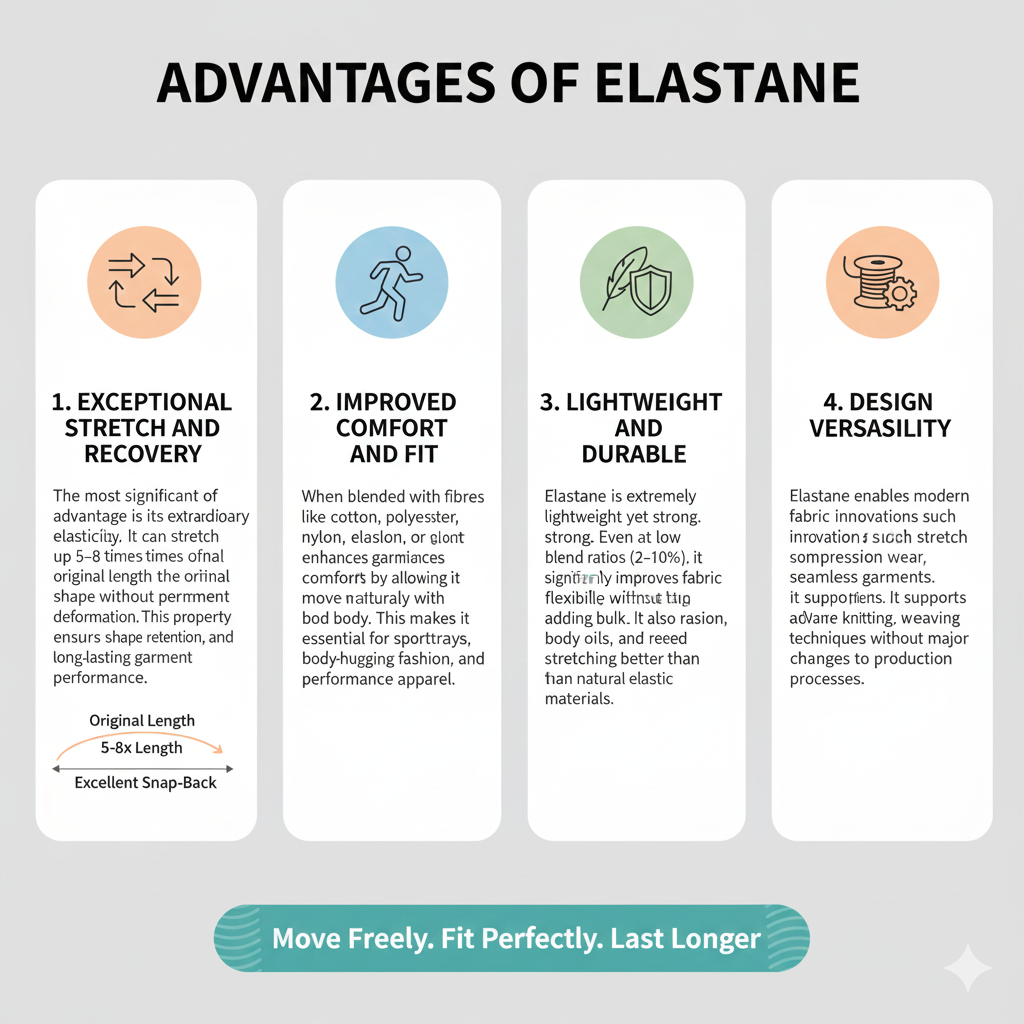
- Exceptional Stretch and Recovery: The most significant advantage of elastane is its extraordinary elasticity. It can stretch up to 5–8 times its original length and return to its original shape without permanent deformation. This property ensures excellent fit, shape retention, and long-lasting garment performance.
- Improved Comfort and Fit: When blended with fibers like cotton, polyester, or nylon, elastane enhances comfort by allowing garments to move naturally with the body. This makes it essential for sportswear, body-hugging fashion, and performance apparel.
- Lightweight and Durable: Elastane is extremely lightweight yet strong. Even at low blend ratios (2–10%), it significantly improves fabric flexibility without adding bulk. It also resists abrasion, body oils, and repeated stretching better than natural elastic materials.
- Design Versatility: Elastane enables modern fabric innovations such as stretch denim, compression wear, and seamless garments. It supports advanced knitting and weaving techniques without major changes to production processes.
Disadvantages of Elastane
While Elastane offers unmatched stretch, this synthetic fiber comes with several drawbacks. It is highly sensitive to heat, leading to damage during high-temperature washing or ironing. Furthermore, Elastane is not biodegradable, posing environmental concerns, and its petroleum-based nature can sometimes cause skin irritation for sensitive users.
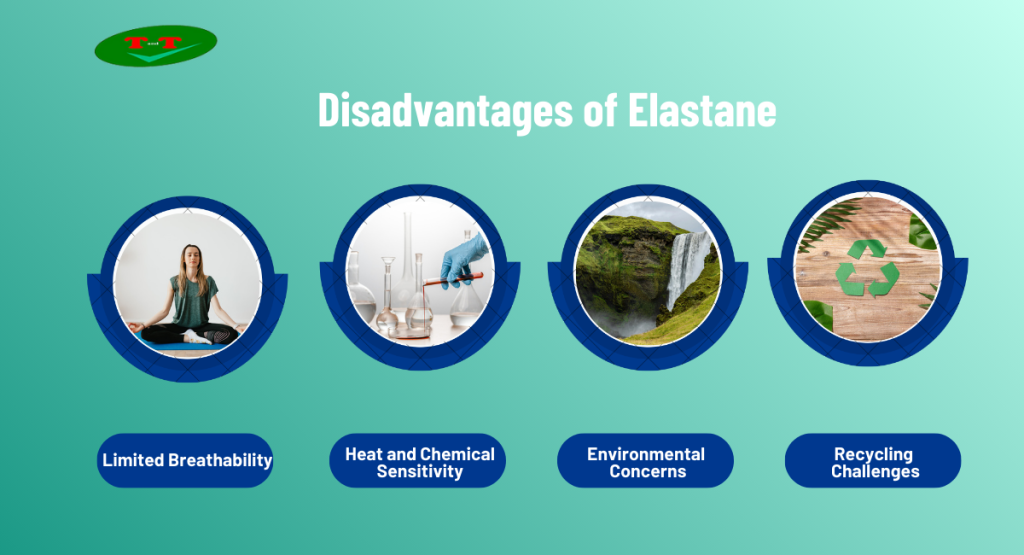
- Limited Breathability: Elastane itself is not breathable. In high percentages or dense constructions, it may reduce air permeability, making garments feel warmer. This is why elastane is usually used in blends rather than alone.
- Heat and Chemical Sensitivity: Elastane fibers are sensitive to high heat, chlorine, and harsh chemicals. Improper washing, drying, or finishing processes can damage elasticity and shorten garment lifespan.
- Environmental Concerns: As a synthetic, petrochemical-based fiber, elastane is not biodegradable and contributes to microplastic pollution. While bio-based elastane options exist, they do not fully solve end-of-life environmental challenges.
- Recycling Challenges: Elastane complicates textile recycling. Even small percentages in blended fabrics make mechanical or chemical recycling more difficult compared to mono-material textiles.
Is Elastane Good or Bad? Final Verdict
Elastane remains one of the most influential functional fibers in modern textiles, offering unmatched stretch, recovery, and fit enhancement at relatively low usage levels. From activewear and swimwear to denim and intimate apparel, its advantages are technically proven and commercially indispensable.
However, elastane is not a universal solution. Its sensitivity to heat, chemicals, and its environmental limitations require careful material selection, controlled processing, and thoughtful product design. Overuse or misapplication can negatively impact breathability, recyclability, and garment lifespan.
For textile professionals, the decision is not whether elastane is good or bad—but how much elastane, in which structure, and for what purpose. When applied strategically and responsibly, elastane delivers performance benefits that outweigh its drawbacks. When used without technical consideration, it can introduce avoidable risks.
Ultimately, elastane should be viewed as a precision performance component, not a default ingredient—one that demands informed decision-making to achieve optimal product value.
TANI THREAD CO., LTD
- Address: Thanh Hoa Hamlet, Thanh Dien Commune, Chau Thanh District, Tay Ninh Province, Vietnam
- Hotline: 0984.841.239
- Email: sale@tanithread.com
- Website: tanithread.com
- Fanpage: Tani Thread