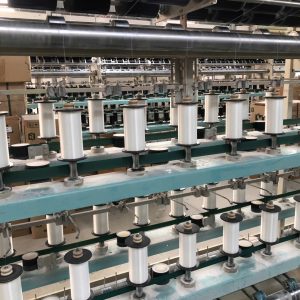
SYNTHETIC THREAD
Selecting the right thread is a critical factor in determining the strength, appearance, and longevity of any finished product. While natural fibers have long played a role in traditional sewing, modern manufacturing increasingly relies on synthetic thread to meet higher performance expectations. Engineered for consistency and durability, synthetic threads—most notably polyester and nylon—offer mechanical and environmental advantages that natural fibers cannot easily replicate. This guide explores their properties, applications, and key differences to support informed material selection.
What Is Synthetic Thread?
Synthetic thread is produced from man-made polymers through controlled chemical processes, typically by extruding continuous filaments and twisting them into uniform yarns. Unlike natural fibers, synthetic threads are designed for predictable performance, making them ideal for industrial-scale production. They deliver higher tensile strength per diameter, improved resistance to abrasion and mildew, and minimal shrinkage, all while maintaining consistent quality across large production batches.
Nylon Thread: Strength and Elasticity for Heavy-Duty Use
Nylon thread is widely recognized for its exceptional strength-to-size ratio and outstanding elasticity. High-tenacity nylon, such as Nylon 6,6, can achieve tensile strengths of up to 10.0 grams per denier, making it suitable for demanding applications where seam integrity is critical. Its ability to stretch and recover under load helps prevent seam breakage, particularly in materials that experience frequent movement or tension.
These characteristics make nylon thread a preferred choice for leather goods, footwear, upholstery, automotive interiors, and industrial safety equipment. However, nylon has notable limitations. It is sensitive to ultraviolet exposure and degrades faster than polyester when used outdoors. Additionally, its higher moisture absorption—approximately 4% regain—can cause temporary elongation in humid or wet environments.
Polyester Thread: Built for Outdoor Endurance
Polyester thread excels where environmental resistance is required. With superior UV stability and very low moisture absorption (around 0.4%), polyester maintains its strength and dimensional stability even under prolonged exposure to sunlight and humidity. Its chemical resistance further enhances durability in applications involving fuels, oils, or cleaning agents.
As a result, polyester thread is the industry standard for outdoor gear, marine textiles, awnings, sails, and general-purpose home sewing. While it offers slightly lower elasticity and tenacity than nylon, its balanced performance, color stability, and cost efficiency make it the most versatile synthetic thread available today.
Nylon vs. Polyester: Making the Right Choice
Nylon provides maximum mechanical strength and flexibility, making it ideal for high-stress indoor applications. Polyester, by contrast, is the preferred solution for outdoor and weather-exposed products due to its UV resistance and long-term stability. Cost considerations also play a role, as polyester is typically more economical and easier to recycle than nylon. Ultimately, selecting the right thread requires aligning material properties with the product’s functional environment and performance demands.
Conclusion
Understanding the mechanical and environmental requirements of a project is essential when selecting synthetic thread. Nylon delivers power, elasticity, and abrasion resistance for heavy-duty construction, while polyester ensures durability and color stability in challenging outdoor conditions. Both materials play a vital role in modern textile manufacturing when applied correctly.
For manufacturers seeking consistent, high-performance thread solutions, Tani Thread is a trusted producer of synthetic threads in Vietnam, supplying global partners—particularly the U.S. market. Our production capabilities support made-to-order specifications, ensuring each thread solution aligns precisely with application, performance, and compliance requirements.
Contact Tani Thread to explore how engineered thread solutions can strengthen your next textile product.
TANI THREAD CO., LTD
Address: Thanh Hoa Hamlet, Thanh Dien Commune, Chau Thanh District, Tay Ninh Province, Vietnam
Hotline: 0984.841.239
Email: sale@tanithread.com
Website: tanithread.com
Fanpage: Tani Thread
Showing the single result