Synthetic fibers, or man-made fibers, represent one of the most significant material innovations of the 20th century. Constituting over half of the global fiber market, these are materials engineered by chemically linking small molecular units (monomers) into long chains known as polymers.
Unlike natural fibers sourced from plants or animals, synthetics are created in laboratories and factories, offering unprecedented control over their properties. From revolutionizing fashion with affordable, durable clothing to enabling critical industrial and medical technologies, synthetic fibers are woven into the fabric of modern life. However, their reliance on fossil fuels and environmental persistence pose urgent challenges, driving a critical evolution toward a more sustainable future.
This article provides a comprehensive overview of synthetic fibers, including their historical development, major fiber types and properties, manufacturing processes, key application sectors, environmental challenges, and the technological innovations shaping a more sustainable future for synthetic textiles.
The History and Rise of Synthetic Fibers
The journey began as a quest to replicate precious natural materials. In the late 19th century, the first “artificial silk” (later known as rayon) was developed from mulberry tree bark, marking the birth of man-made fibers. However, the true revolution came with the dawn of fully synthetic polymers derived from petrochemicals.
The pivotal breakthrough occurred in 1935 when Wallace Carothers of DuPont invented nylon, the first fully synthetic fiber. Marketed initially in women’s stockings, its strength and elasticity saw it swiftly adapted for critical wartime uses like parachutes and ropes. This was soon followed by the patenting of polyester in 1941. By the 1950s and 1960s, a wave of new fibers entered the market: acrylic as a wool alternative, and spandex (invented in 1959) for exceptional stretch. The latter half of the century saw the rise of high-performance fibers like Kevlar, used in bulletproof vests, cementing synthetics’ role far beyond the apparel industry.
Types and Key Properties of Synthetic Fibers
Synthetic fibers are categorized by their chemical origin and endowed with specific, engineered traits.
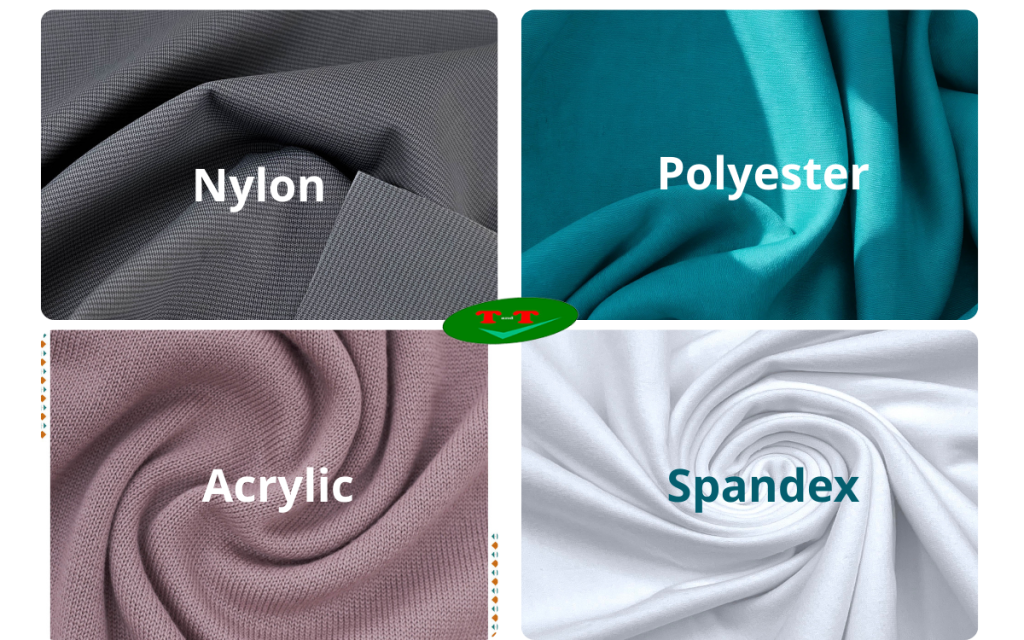
Petrochemical-Based Fibers:
- Polyester (PET): The undisputed market leader, polyester is prized for its high durability, excellent wrinkle resistance, and quick-drying nature. It is hydrophobic (water-repelling), which makes it stain-resistant but less breathable. It dominates markets from fast fashion and sportswear to home furnishings and industrial applications.
- Nylon (Polyamide): Known for its exceptional strength, elasticity, and abrasion resistance, nylon was the first fully synthetic fiber. It is resilient, lustrous, and dries quickly, making it ideal for activewear, swimwear, hosiery, carpets, and ropes.
- Acrylic: Designed to mimic wool, acrylic is soft, warm, and lightweight. It is cost-effective, moth-proof, and retains color well, commonly used in knitwear, blankets, and faux fur.
- Spandex (Elastane): Valued solely for its extraordinary elasticity, spandex can stretch 500-800% and recover its shape. It is never used alone but blended in small percentages (2-20%) to add stretch to jeans, leggings, and athletic wear.
Cellulosic (Semi-Synthetic) Fibers: This category, including rayon and acetate, begins with natural cellulose (often from wood pulp) which is then chemically dissolved and regenerated into fiber. Rayon is celebrated for its silky drape, softness, and high absorbency, though it loses strength when wet.
Manufacturing and Key Advantages
Most synthetic fibers are produced through melt spinning: polymer chips are melted and forced through fine holes in a device called a spinneret to form continuous filaments, which are then cooled, stretched, and wound. This process allows for mass production and precise customization.
Their global dominance stems from a compelling set of advantages over natural fibers:
- Performance & Durability: Synthetics offer superior strength, abrasion resistance, and shape retention.
- Functionality: They can be engineered for water resistance, quick drying, wrinkle resistance, and elasticity.
- Economy & Care: Large-scale production makes them cost-effective. They are also easy to care for, often being machine washable and quick-drying.
- Versatility: Their properties can be finely tuned for applications ranging from delicate lingerie to heavy-duty industrial belts.
Diverse Applications
The use of synthetic fibers extends into nearly every sector:
- Apparel & Fashion: The primary market, used in everything from everyday t-shirts and suits to performance activewear and lingerie.
- Home Furnishings: Widely used in carpets, upholstery, curtains, and bedding due to durability and stain resistance.
- Industrial & Technical: Critical for tire cords, conveyor belts, ropes, safety gear, and filtration systems due to their high strength.
- Specialized Fields: Used in medical sutures and implants, automotive airbags and seat belts, and high-tech composites for aerospace.
Environmental Impact and Challenges
The environmental footprint of synthetic fibers is a major concern, centered on two core issues:
Fossil Fuel Dependency & Emissions: Most synthetics are derived from non-renewable petroleum. Producing acrylic, for example, can generate over 35 kg of CO₂ per kg of fiber. The entire lifecycle, from production to disposal, contributes to greenhouse gas emissions.
Pollution & Microplastics: Synthetic fibers are non-biodegradable and can persist in landfills for centuries. During washing, garments shed microfibers—tiny plastic particles that bypass water treatment and pollute oceans, entering the food chain. This microplastic pollution is now a significant ecological threat.
The Future: Sustainability and Innovation
The industry is responding to these challenges with focused innovation:
- Recycled Fibers: Recycled Polyester (rPET), made from post-consumer plastic bottles, is the most established solution, reducing reliance on virgin petroleum and plastic waste.
- Bio-based Polymers: Research is advancing fibers sourced from renewable materials like corn, castor oil, or agricultural waste, aiming to break the fossil fuel link.
- Advanced Recycling: Chemical recycling technologies that break down fabrics to their original monomers promise true circularity for complex blends.
- Performance Evolution: Innovations like temperature-regulating fabrics and enhanced filtration fibers continue to push the boundaries of what synthetic materials can do.
Conclusion
Synthetic fibers are a testament to human ingenuity, providing the material foundation for modern convenience, performance, and safety. Their story is now at a crossroads. The path forward depends on the industry’s ability to balance their unparalleled utility with ecological responsibility. The future will be shaped by a transition from a linear “take-make-dispose” model to a circular one, where innovation in recycling and bio-based materials mitigates environmental harm while preserving the functional benefits that have made synthetic fibers indispensable.
At Tani Thread, we specialize in manufacturing and exporting high-quality covered yarns. We combine robust spandex cores with polyester or nylon sheaths to deliver the exact elasticity, handfeel, and reliability your designs demand, meeting the stringent standards of the U.S. market.
Ready to build a better foundation for your next collection? Contact the Tani Thread team today to discuss your yarn specifications and receive tailored samples.
TANI THREAD CO., LTD
- Address: Thanh Hoa Hamlet, Thanh Dien Commune, Chau Thanh District, Tay Ninh Province, Vietnam
- Hotline: 0984.841.239
- Email: sale@tanithread.com
- Website: tanithread.com
- Fanpage: Tani Thread