Understanding the different types of fabric is a fundamental skill that bridges the gap between creative vision and tangible product. For designers, manufacturers, and discerning consumers, this knowledge is not merely academic—it is critical for performance, sustainability, and cost-efficiency.
This guide provides a structured, comprehensive exploration of the textile world. It begins by demystifying fundamental construction methods—the very architecture of fabric—before delving into the distinct families of fibers: natural, synthetic, and regenerated. We will explore strategic fiber blending, popular fabric types by name, and conclude with actionable strategies for selecting the perfect material for any project, empowering you to make confident, informed decisions.
Understanding Fabric Construction: Woven, Knitted, and Non-Woven
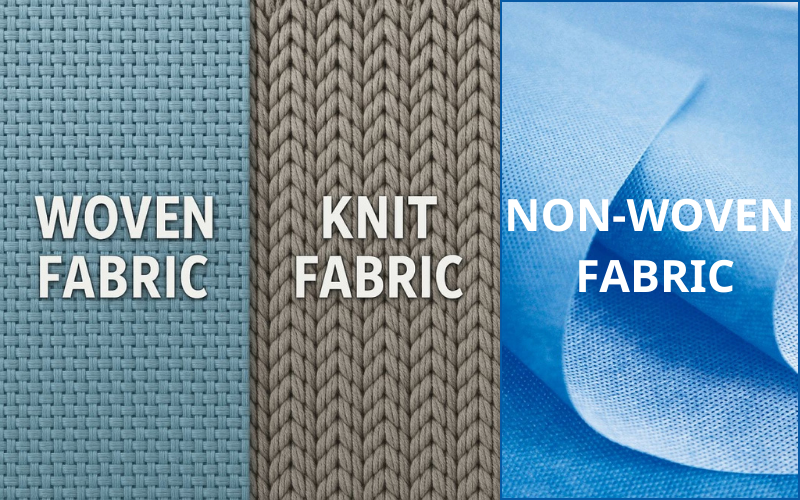
The method by which fibers are assembled is the primary determinant of a fabric’s behavior. This foundational choice dictates its stretch, drape, strength, and optimal use case.
Woven Fabrics: Structure and Durability
Woven fabrics are created on a loom by interlacing two distinct sets of yarns at right angles: the warp (lengthwise) and the weft (crosswise).
Key Characteristics: This interlacement creates fabrics that are inherently stable, strong, and have minimal inherent stretch along the grain. They tend to fray when cut and hold a crisp, defined shape.
Common Weaves:
- Plain Weave: The simplest and strongest (e.g., cotton shirting, chiffon).
- Twill Weave: Creates a diagonal rib, known for durability and drape (e.g., denim, gabardine).
- Satin Weave: Features long yarn “floats” for a smooth, lustrous surface but can be less durable (e.g., satin, charmeuse).
Primary Applications: Denim, button-down shirts, suits, upholstery, bed linens, and curtains.
Knitted Fabrics: Flexibility and Comfort
Knitted fabrics are formed by interlocking a series of loops from one continuous yarn, either by hand or machine.
Key Characteristics: The looped structure grants knits significant elasticity, stretch recovery, wrinkle resistance, and softness. They are generally more comfortable for body-hugging garments but can be prone to runs or snags.
Primary Types:
- Weft Knits: Loops are formed horizontally; rows are built upon one another (e.g., jersey for T-shirts, rib knits for cuffs).
- Warp Knits: Loops are formed vertically, linked together across the width; these are typically more stable and run-resistant (e.g., tricot for lingerie, mesh for athleticwear).
Primary Applications: T-shirts, sweatshirts, leggings, activewear, sweaters, and socks.
Non-Woven Fabrics: Engineered Functionality
Non-woven fabrics are manufactured by bonding or felting fibers together through mechanical, chemical, thermal, or solvent means—bypassing the traditional spinning and weaving/knitting processes.
- Key Characteristics: They are often engineered for specific, single-use or durable functions. Properties like absorbency, liquid repellence, and filtration can be finely tuned. They are typically not as strong as wovens or knits but are cost-effective for their intended purposes.
- Primary Applications: Medical disposables (surgical masks, gowns), wipes, filters, geotextiles, insulation, and interfacing for garment structure.
Having explored the architecture of fabrics through their construction methods, we now turn to the core materials that define their very essence: the fibers.
Guide to Natural Fabrics: From Cotton to Wool
Derived from plants or animals, natural fibers are celebrated for their breathability, biocompatibility, and, increasingly, their potential for biodegradability within a circular economy.
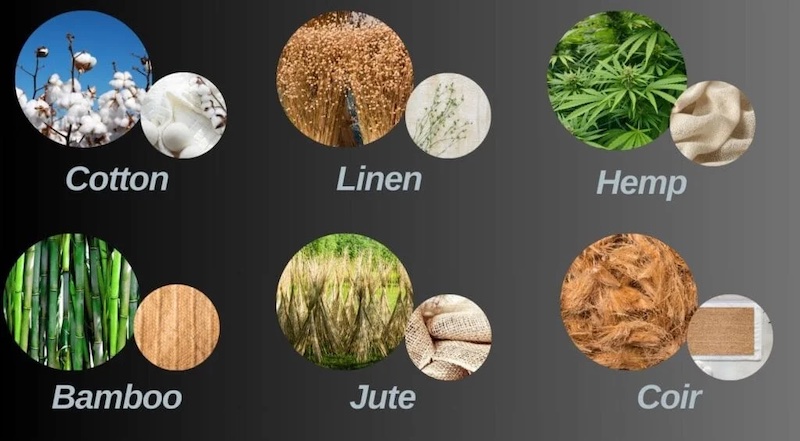
Cotton: The Universal Standard
Grown from the cotton plant’s seed pod, cotton is a staple cellulose fiber.
- Characteristics: Highly breathable, soft, hypoallergenic, and absorbent (can absorb up to 27 times its weight in water). It dyes well but can shrink and wrinkle.
- Sustainability & Certifications: Conventional cotton farming is resource-intensive. Look for GOTS (Global Organic Textile Standard) or BCI (Better Cotton Initiative) certifications for more sustainable options.
- Primary Uses: T-shirts, denim, bed linens, towels, and intimate apparel.
Linen: The Ancient, Sustainable Cool
Extracted from the stalks of the flax plant, linen is one of humanity’s oldest textiles.
- Characteristics: Exceptionally strong, breathable, and moisture-wicking, offering a distinctive crisp handfeel and natural luster. It becomes softer with each wash but wrinkles readily, a characteristic embraced as part of its aesthetic.
- Sustainability Note: Flax requires significantly less water and fewer pesticides than cotton and utilizes the entire plant.
- Primary Uses: Summer clothing, tablecloths, napkins, and high-quality bed sheets.
Silk: The Protein-Based Luxury
A continuous filament spun by silkworms to form their cocoons, silk is a natural protein fiber.
- Characteristics: Renowned for its natural sheen, smooth tactile hand, excellent drape, and high tensile strength. It is thermoregulating, keeping the wearer cool in summer and warm in winter.
- Key Types: Mulberry silk (most common and uniform), Tussah silk (wild, thicker, and less uniform).
- Primary Uses: Luxury eveningwear, ties, scarves, linings, and premium bedding.
Wool: Nature’s Advanced Insulator
Sourced from sheep (e.g., Merino) and other animals like goats (cashmere, mohair) and alpacas.
- Characteristics: Excellent thermoregulation and moisture-wicking due to its crimped structure. It is naturally flame-resistant, elastic, and odor-resistant. Can feel itchy against sensitive skin, depending on the micron (fineness) of the fiber.
- Key Types: Merino wool (very fine and soft), Cashmere (ultra-soft and lightweight), Shetland wool (hard-wearing and tweedy).
- Primary Uses: Sweaters, suits, coats, socks, blankets, and high-performance outdoor base layers.
Hemp: The Rapidly Renewable Workhorse
A bast fiber derived from the stalks of the Cannabis sativa plant.
- Characteristics: One of the strongest and most durable natural fibers. It is highly breathable, UV-resistant, antimicrobial, and becomes softer with washing. Its cultivation requires minimal water and no pesticides.
- Primary Uses: Canvas, durable bags, workwear, denim blends, and home furnishing textiles.
Synthetic Fabrics: Engineered for Performance and Efficiency
Synthetic fibers are human-made, typically from polymers derived from petrochemicals. They are designed to offer consistent, high-performance properties that can be difficult to achieve with natural fibers alone.
Polyester: The Versatile Global Leader
Polyester is a polymer primarily derived from petroleum, known chemically as polyethylene terephthalate (PET).
- Characteristics: Extremely strong, wrinkle-resistant, quick-drying, and colorfast. It has low absorbency and can retain body odor if not treated. Modern variants focus on moisture-wicking and soft handfeel.
- Sustainability Innovation: Recycled Polyester (rPET) is produced from post-consumer plastic bottles, diverting waste and reducing reliance on virgin petroleum.
- Primary Uses: Activewear, outdoor clothing, fleece, upholstery, and industrial applications.
Nylon (Polyamide): Strength and Elasticity
The first commercially successful synthetic fiber, valued for its toughness.
- Characteristics: Exceptionally strong, elastic, abrasion-resistant, and easy to wash. It has a smooth, somewhat shiny surface.
- Primary Uses: Hosiery, swimwear, activewear, windbreakers, tents, and carpets.
Spandex (Elastane/Lycra®): The Elastic Component
A polyurethane-based fiber known for its extreme stretch.
- Characteristics: Can stretch 500-800% of its length and recover perfectly. It is never used alone but is blended (typically 2-20%) to add stretch and recovery to other fabrics.
- Primary Uses: Sportswear, leggings, denim, underwear, and compression garments.
Acrylic: The Economical Wool Mimic
Designed as a lightweight, warm, and easy-care alternative to wool.
- Characteristics: Soft, warm, lightweight, colorfast, and moth-proof. It can pill and lacks wool’s natural breathability and moisture management.
- Primary Uses: Sweaters, blankets, faux fur, and craft yarns.
Regenerated Cellulosic Fabrics: Nature Enhanced by Science
This category begins with natural cellulose (usually from wood pulp) and processes it chemically to dissolve and regenerate it into a new fiber. They offer a balance between natural feel and enhanced performance.
Viscose Rayon: The Classic Drape
The most common type of rayon, made from dissolved wood pulp.
- Characteristics: Excellent drape, smooth, silky feel, highly absorbent, and breathable. Its main weakness is a significant loss of strength when wet, requiring careful laundering. Traditional viscose production can be chemically intensive.
- Primary Uses: Blouses, dresses, linings, and scarves.
Modal: The Enhanced Rayon
A type of rayon made specifically from beech tree pulp.
- Characteristics: Softer, stronger when wet, and more dimensionally stable than standard viscose. It is known for its luxurious, silky handfeel and vibrant color retention.
- Primary Uses: High-quality underwear, pajamas, bedding, and premium T-shirts.
Lyocell (Tencel®): The Sustainable Cellulosic
A rayon variant produced using a closed-loop solvent spinning process that recycles over 99% of water and chemicals.
- Characteristics: Combines the breathability and drape of rayon with strength surpassing cotton and even polyester when wet. It has a smooth, soft surface that resists pilling. Its production is notably more environmentally friendly. It is biodegradable under industrial composting conditions, but rate depends on finishes applied.
- Certifications: Often carries OEKO-TEX certification for safety.
- Primary Uses: Sustainable activewear, denim, casual tops, and bedding.
Blended Fabrics: Strategic Synergy for Enhanced Performance
Blended fabrics represent a deliberate and intelligent engineering choice in textile development. By combining two or more different fibers, manufacturers can create fabrics that strategically merge the best properties of each component. This synergy results in textiles that offer superior overall performance, addressing specific needs for comfort, durability, easy care, and cost-effectiveness in ways that single-fiber fabrics often cannot.
Cotton-Polyester: The Universal Workhorse Blend
This is arguably the most common and versatile blend globally. It masterfully balances the natural benefits of cotton with the engineered strengths of polyester. Cotton provides softness, breathability, and high absorbency for day-long comfort. Polyester adds wrinkle resistance, shape retention, quick-drying ability, and increased durability. The result: A fabric that is easy to care for, maintains a fresh appearance with minimal ironing, and offers excellent value. It is the cornerstone of casual wear, uniforms, and everyday fashion.
Other Strategic Blends for Targeted Applications:
- Wool – Acrylic: Ideal for knitwear and winter clothing. Wool delivers natural warmth, insulation, and a premium handfeel, while acrylic enhances durability, reduces cost, and makes the garment machine-washable for easier maintenance.
- Nylon – Spandex: The foundation of performance and form-fitting apparel. Nylon provides exceptional strength and abrasion resistance, while spandex (typically 5-20%) delivers essential stretch and recovery, ensuring freedom of movement and a lasting fit in activewear, swimwear, and leggings.
- Linen – Cotton or Linen-Rayon: Perfect for warm-weather collections. Linen offers unmatched breathability, a distinctive textured look, and strength, while cotton or rayon significantly softens the handfeel and reduces the pronounced wrinkling characteristic of pure linen.
For advanced performance fabrics, the blending of fibers often happens at the yarn level through precision engineering. Covered yarn technology, which encases a high-performance elastane (spandex) core within a sheath of nylon, polyester, or cotton, is a prime example. This method allows for unparalleled control over elasticity, recovery, and the final handfeel of the fabric, making it a cornerstone for high-demand applications in activewear, denim, and intimate apparel targeting markets like the U.S.
Tani Thread specializes in producing high-quality covered yarns, offering customized polyester-spandex and nylon-spandex solutions for manufacturers. Our expertise ensures the consistent, durable stretch essential for modern blended fabrics.
Ready to engineer the perfect stretch for your next collection? Contact Tani Thread‘s specialists today to discuss your covered yarn needs.
TANI THREAD CO., LTD
- Address: Thanh Hoa Hamlet, Thanh Dien Commune, Chau Thanh District, Tay Ninh Province, Vietnam
- Hotline: 0984.841.239
- Email: sale@tanithread.com
- Website: tanithread.com
- Fanpage: Tani Thread
Popular Fabric Types and Names
While understanding fibers and construction is essential, we often identify fabrics by their common commercial names like “Denim,” “Jersey,” or “Satin.” These names typically describe a fabric’s characteristic structure, texture, or finish rather than just its fiber content. This section decodes these familiar terms, linking them back to the technical foundations covered earlier. Use the table below as a practical guide to recognize, select, and apply the right fabric for your specific project or product.
| Fabric Name | Primary Construction / Fiber Association | Key Defining Features | Typical Uses |
| Canvas | Plain or Duck Weave, Heavy Cotton/Linen/Polyester | Dense, heavy-duty, very durable and sturdy. | Tents, sails, backpacks, artist canvas, shoes. |
| Denim | Twill Weave, Traditionally Cotton | Diagonal rib (twill), often yarn-dyed (colored warp, white weft). | Jeans, jackets, workwear. |
| Satin | Satin Weave, Can be Silk, Polyester, Nylon | Lustrous front surface, dull back; excellent drape. | Evening gowns, lingerie, bedding, linings. |
| Velvet | Pile Weave, Can be Silk, Cotton, Synthetic | Dense, even pile creating a soft, luxurious nap. | Upholstery, evening wear, drapes. |
| Jersey | Weft Knit, Commonly Cotton, Wool, or Blends | Smooth face, looped back; stretchy and comfortable. | T-shirts, dresses, bed sheets, sportswear. |
| Chiffon | Plain Weave, Sheer, Silk or Synthetic | Lightweight, sheer, slightly rough texture (crepe twist yarn). | Flowy evening wear, scarves, overlays. |
| Crêpe | Characteristic Texture, Various Weaves/Knits | Crinkled, pebbled surface from high-twist yarns. | Dresses, suits, blouses, scarves. |
| Tweed | Rough Woven, Traditionally Wool | Thick, hearty, often featuring multi-colored yarns. | Suits, jackets, coats, skirts. |
| Lace | Open-Work Construction, Various Fibers | Ornamental, decorative openwork with patterned holes. | Bridal wear, lingerie, trims, tablecloths. |
| Felt | Non-Woven, Wool or Synthetic | Made by matting, condensing, and pressing fibers together. | Hats, crafts, industrial padding, piano hammers. |
How to Choose the Right Fabric for Your Project
Selecting the optimal fabric requires a systematic evaluation of your project’s requirements.
- Define the Primary Function & End-Use: What is the fabric’s core job? Is it for high-movement athleticwear (needs stretch, wicking), durable workwear (needs abrasion resistance), or breathable summer clothing? Consider the environment it will be used in.
- Prioritize Aesthetic and Handle: Determine the desired drape (fluid vs. structured), sheen (matte vs. lustrous), texture, and handfeel (crisp, soft, heavy).
- Evaluate Care and Lifespan Requirements: Be realistic about maintenance. Can it be machine-washed, or does it require dry cleaning? This impacts long-term usability and cost.
- Incorporate Sustainability Goals: Prioritize fibers and certifications aligned with your values.
- Fibers: Organic cotton, linen, hemp, lyocell, recycled polyester (rPET), certified responsible wool (RWS).
- Key Certifications: GOTS (organic processing), OEKO-TEX Standard 100 (free from harmful substances), GRS (Global Recycled Standard), Bluesign® (sustainable manufacturing).
- Balance Performance with Budget: Premium natural fibers and high-tech performance fabrics command higher prices. Blends often offer the best cost-to-performance ratio for many applications.
- Source and Test: Always request fabric swatches to assess color, weight, and handfeel in person. Review technical datasheets for GSM, composition, shrinkage, and care instructions before bulk ordering.
Conclusion
Navigating the world of textiles reveals a remarkable synergy between nature’s offerings and human ingenuity. From the timeless, breathable comfort of natural fabrics like cotton and linen to the high-performance, engineered precision of synthetics like polyester and spandex, each fiber and construction method serves a distinct purpose. The innovation of regenerated cellulosics like lyocell and the strategic science of fabric finishes further expand possibilities, allowing for materials that are high-performing, aesthetically refined, and increasingly sustainable.
Mastering the characteristics of different types of fabric—from their fundamental construction to their technical specifications—is the foundation of intentional creation. By applying this step-by-step selection framework, you can ensure every fabric choice aligns perfectly with your project’s functional needs, aesthetic vision, and ethical values, leading to superior, thoughtful, and successful end products.