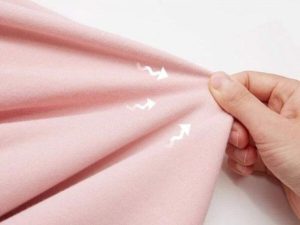
Have you ever wondered what makes your leggings so comfortable or your swimwear so form-fitting? The answer is spandex—a lightweight, synthetic fiber made of a long-chain polymer called polyurethane. Distinguished by its ability to stretch up to 500% of its length and immediately recoil to its original shape, spandex is far superior to natural rubber. It is not only stronger and lighter but also resistant to body oils, perspiration, and detergents.
Spandex was invented in the late 1950s, with DuPont introducing the fiber commercially under the brand name Lycra in 1959.
But how did this “miracle fiber” move from a wartime laboratory to the backbone of modern apparel? This article explores the fascinating timeline behind spandex and answers the enduring question: When was spandex invented?
The Origins of Spandex: A Search for a Rubber Alternative
The history of spandex began not in a fashion house, but in a world-changing crisis. During the early 1900s, women’s foundation garments, like girdles, were made of rubber—the same material used for tires. These garments were heavy, non-breathable, and notoriously uncomfortable.
World War II and the Rubber Shortage
When World War II erupted, natural rubber supplies were redirected to military applications such as tires and equipment. This scarcity forced chemical companies, including DuPont, to search for a synthetic elastic fiber that could replicate rubber’s stretch while improving comfort, durability, and stability.
Dr. Joseph Shivers’ Scientific Breakthrough
The quest was led by Dr. Joseph Shivers, a DuPont chemist. While polyurethane elastomers were first produced in 1940, they initially only created “millable gums” rather than fine threads. In 1949, Shivers made his first attempt at an elastic fiber, but it failed because it didn’t snap back to its original shape. After the project was briefly shelved in 1950, Shivers’ persistence eventually led him to modify Dacron polyester with an intermediate substance, creating a polymer that finally “bounced” and withstood high temperatures.
When Was Spandex Invented? A Clear Timeline

The “invention” of spandex wasn’t a single moment but a series of scientific milestones across the 1950s:
- Early 1950s: Joseph Shivers successfully synthesized the first functional elastomeric fiber at DuPont laboratories.
- 1952: Independently, the German company Farbenfabriken Bayer earned a patent for a similar synthesis.
- 1958: DuPont officially received the patent for the fiber.
- 1959: The fiber was introduced to the world under the brand name Lycra.
- 1962: Full-scale commercial manufacturing began.
The name “Spandex” is actually an anagram of the word “expands,” perfectly describing its core characteristic.
How Spandex Transformed Fashion and Performance Wear
Once released, spandex didn’t just replace rubber; it revolutionized how the world dressed.
The 1960s: The Death of the Rubber Girdle
Spandex quickly replaced heavy rubber threads in undergarments because it was lighter and didn’t break down when exposed to lotions or sweat. It also fueled the iconic designs of the 1960s, such as the mini skirt and the flamboyant disco fashion.
The 1970s – 1980s: The Fitness Explosion
The running trend of the 1970s and the aerobics boom of the 1980s propelled spandex into the mainstream. Brightly colored leggings and leotards became a cultural symbol of the era, transforming spandex from a hidden support fiber into a bold fashion statement.
The 21st Century: Performance and High-Tech
Today, spandex is ubiquitous. It is found in everything from skinny jeans and yoga pants to high-performance swimwear and medical compression bandages. It has even reached the stars, being a critical component in the construction of space suits. Modern innovations continue to integrate spandex with moisture-wicking technology and UV protection to meet the needs of professional athletes.
Conclusion
From a wartime rubber substitute to a cornerstone of modern textiles, spandex represents one of the most influential material innovations of the 20th century. From its invention in the late 1950s to its widespread adoption across modern apparel and technical textiles, spandex has proven that innovation in materials can redefine comfort and performance. Yet in today’s textile industry, performance depends not only on the fiber itself, but on how it is engineered into yarn.
At Tani Thread, we specialize in manufacturing covered spandex yarn and elastic thread using high-quality spandex as the core component. Based in Viet Nam, we are an export-oriented manufacturer serving the U.S. market, with production capabilities designed to support custom specifications—including yarn count, covering structure, elongation, and application-specific performance requirements.
With a focus on long-term reliability, Tani Thread partners with brands and manufacturers seeking elastomeric yarn solutions. Contact us to discuss your technical needs or request a customized yarn solution tailored to your end-use application.
TANI THREAD CO., LTD
- Address: Thanh Hoa Hamlet, Thanh Dien Commune, Chau Thanh District, Tay Ninh Province, Vietnam
- Hotline: 0984.841.239
- Email: sale@tanithread.com
- Website: tanithread.com
- Fanpage: Tani Thread